Culturally appropriating tattoos.


A few days ago, a friend of mine from Slovenia sent me a picture of his friend's tattoo which was written in Chinese and asking me for translation.
So I told her that the top letter is 美 as in beautiful/pretty and the bottom one is 爱 which means love. She was actually hoping that it meant hooker or something else. Well, sorry to disappoint her it actually meant beautiful love.
So while translating it for her I was thinking to myself why would someone get a tattoo in another language if they don't even understand it. A Slovenian guy getting a Chinese tattoo, seems a bit weird isn't it?
Does that count as cultural appropriation?
This issue becomes even more complicated when the tattoos themselves are tied into your own spirituality, either with the actual symbols or with what those symbols represent. It is important to understand how these can be harmful and appropriative in many cases. (Coles, 2016) Tattoos of Asian deities, the Buddha, Calaveras, Native American headdresses, and Tā moko are often appropriated. In some cases, these tattoos have become so popular and overused that it gets too mainstream to the point that people just accept it as it is.
Tā moko are permanent tattoos that are done the Māori, the indigenous people of New Zealand. The art form was brought to the Maori from Polynesia and is considered highly sacred. (Zealand Tattoo, n.d.) It is often used as a symbol of social status, prestige, rank, and power. The great thing about Maori tattoos is that to this day, no two tattoos are alike. Maori tattoos are one of a kind. They are always highly intricate and detailed and display the craftsmanship and artistry of not only the artist but of the Maori culture. (Zealand Tattoo, n.d.)
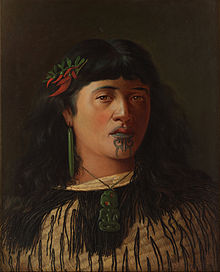
A painting of a young Maori woman with a moko tattoo by Louis John Steele.

A Maori man with moko tattoo. (Zealand Tattoo, n.d.)


Caucasian models with fake Ta Moko tattoos for "fashion". Clearly, they don't understand how Ta Moko tattoos work as only women have these tattoos on their lips and chins. (han yolo, 2015)
References
Coles, D. (2016). Cultural appropriation and tattoos | Spiral Nature Magazine. [online] Spiral Nature Magazine. Available at: http://www.spiralnature.com/spirituality/cultural-appropriation-tattoos/ [Accessed 6 Jul. 2017].
En.wikipedia.org. (n.d.). Calavera. [online] Available at: https://en.wikipedia.org/wiki/Calavera [Accessed 6 Jul. 2017].
En.wikipedia.org. (n.d.). Tā moko. [online] Available at: https://en.wikipedia.org/wiki/T%C4%81_moko [Accessed 6 Jul. 2017].
han yolo. (2015). [online] Available at: http://sportsbruja.tumblr.com/post/115450741516/takealookatyourlife-yungugly93-im-vomiting [Accessed 6 Jul. 2017].
Zealand Tattoo. (n.d.). Maori Tattoo: The Definitive Guide to Ta Moko. [online] Available at: http://www.zealandtattoo.co.nz/tattoo-styles/maori-tattoos/ [Accessed 6 Jul. 2017].


Comments
Post a Comment